
For automotive dealers, selling forged wheels is not simply a matter of choosing attractive designs and adding them to a product catalog. Forged wheels are a technical aftermarket product. Their commercial success depends on fitment accuracy, product positioning, inventory planning, quality control, installation support, and the ability to explain their value to the final customer.
A dealer who treats forged wheels as a purely visual product may face avoidable problems: incorrect fitment, slow-moving inventory, costly returns, warranty disputes, and price competition. A dealer who treats them as a structured product category can build a stronger business with higher customer trust and better long-term margins.
This guide explains what dealers should evaluate before selling forged aluminum wheels, custom performance wheels, or private-label forged wheel collections.
1. Why Forged Wheels Are Attractive to Dealers
Forged wheels occupy an important position in the aftermarket wheel market. They are generally associated with performance vehicles, luxury vehicles, motorsport applications, premium SUVs, and customers who want a more distinctive specification than standard cast wheels can provide.
For dealers, the attraction comes from several areas.
Higher perceived value
Forged wheels are often purchased as part of a broader vehicle upgrade. Customers may also purchase tires, suspension components, brake upgrades, body kits, ceramic coating, installation services, or custom alignment.
This means the wheel sale can create additional revenue opportunities beyond the product itself.
Strong customization potential
A forged wheel program can include multiple diameters, widths, offsets, finishes, spoke designs, center-lock options, center caps, and branded details.
This allows dealers to build a product range around customer requirements rather than competing only on one standard SKU.
Better brand differentiation
Many standard aftermarket wheels compete in crowded price segments. A carefully designed forged wheel collection gives a dealer more room to develop a recognizable identity.
The differentiation may come from:
Exclusive spoke designs
A defined finish palette
Vehicle-specific fitment
Limited production runs
Private-label branding
Custom engineering support
Premium installation and after-sales service
More professional customer relationships
Forged wheels require consultation. Customers need help selecting size, width, offset, bolt pattern, center bore, tire specification, brake clearance, and usage category.
This creates an opportunity for dealers to sell expertise rather than only selling a physical product.
2. Forged Wheels Are a Technical Product, Not Just a Styling Product
The appearance of a wheel is important, but appearance is only one part of the buying decision.
A forged wheel must work with the vehicle’s mechanical systems and intended use. Before quoting or recommending a product, a dealer should collect complete vehicle and application information.
Key data normally includes:
Vehicle make and model
Model year
Body style
Engine or performance version
Front and rear axle requirements
Wheel diameter
Wheel width
Bolt pattern or PCD
Offset or ET
Center bore
Tire size
Brake caliper and rotor information
Suspension modifications
Intended driving environment
Required load rating
Quantity and target delivery date
A customer’s request for “20-inch forged wheels” is not enough information for a reliable quotation. Two vehicles using the same wheel diameter may require completely different widths, offsets, center bores, and brake clearances.
For a dealer, the fitment process is part of the product. It should be treated as a controlled sales procedure rather than an informal recommendation.
3. Understanding the Manufacturing Process
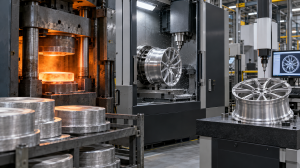
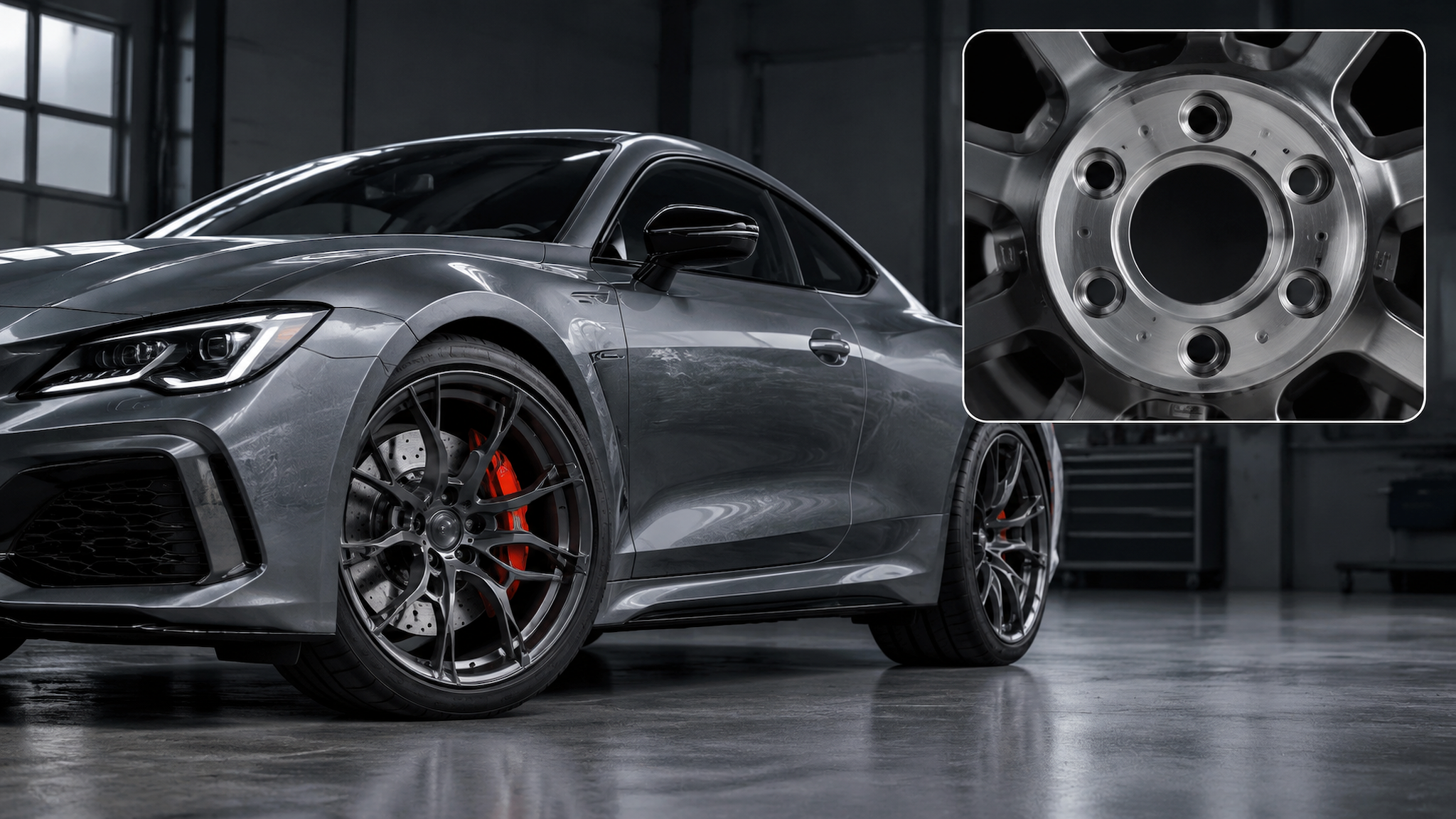
A dealer does not need to operate a forging factory, but understanding the manufacturing process helps when evaluating suppliers and explaining product value.
Forging
Forging begins with an aluminum alloy blank that is heated and formed under high pressure. The process can create a more compact material structure and provide a strong foundation for later machining and weight optimization.
However, the word “forged” alone does not guarantee a specific level of quality. The final result depends on the alloy, forging process, heat treatment, machining accuracy, structural design, and testing procedures.
Heat treatment
Heat treatment influences the mechanical properties and dimensional stability of the wheel. Dealers should ask suppliers how heat treatment is controlled and documented.
Useful questions include:
Which material grade is used?
Is the material traceable by batch?
What heat-treatment process is applied?
Is the process documented?
How are rejected or non-conforming parts controlled?
CNC machining
CNC machining creates the final wheel geometry, including:
Spoke structure
Rim profile
Bolt holes
Center bore
Mounting face
Valve hole
Rear pocketing or weight-reduction areas
Precision machining is especially important for custom forged wheels because a small dimensional error can affect installation, brake clearance, or vehicle alignment.
Surface finishing
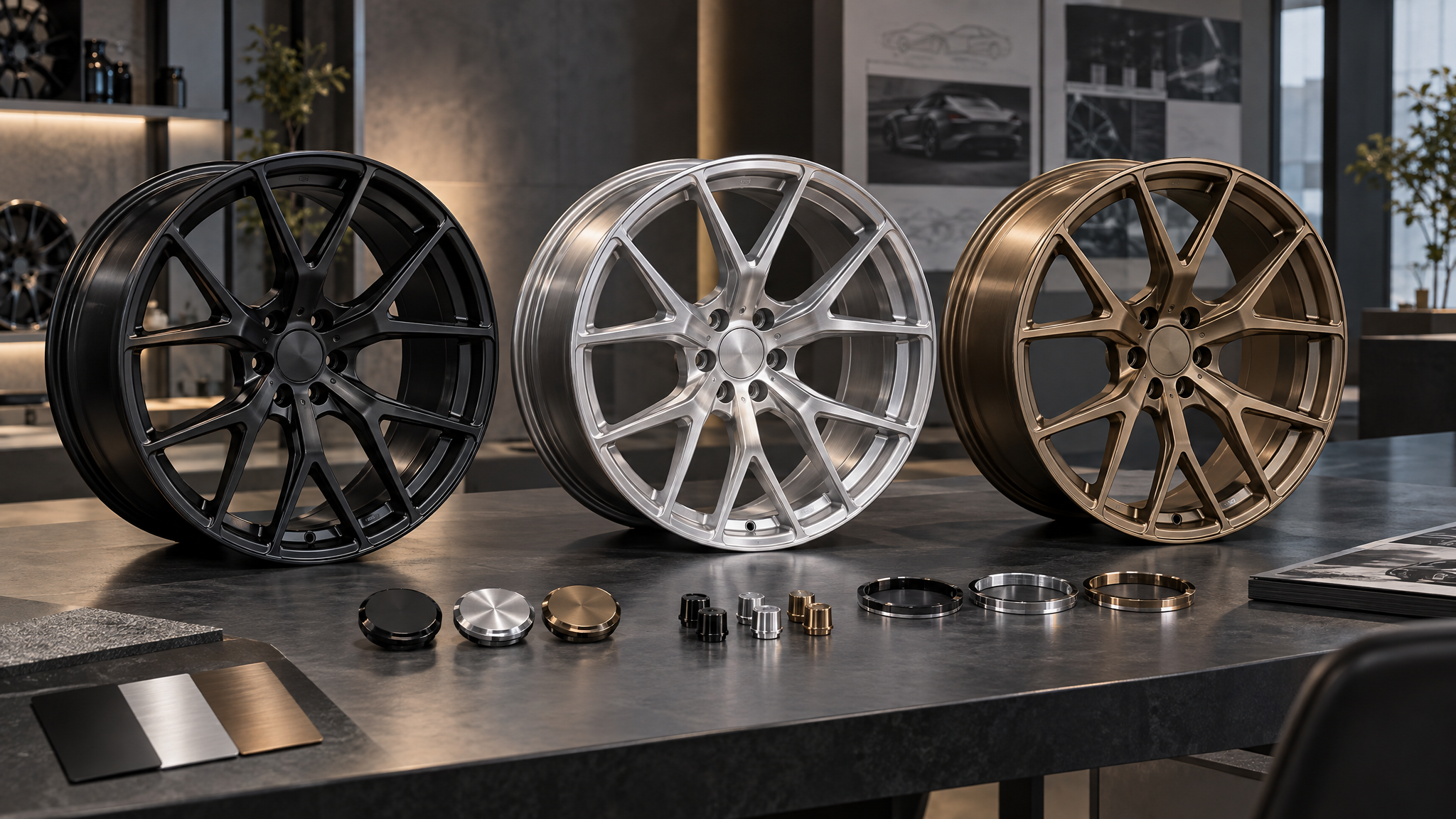
Common finishes may include:
Gloss black
Satin black
Brushed aluminum
Machined face
Gunmetal
Bronze
Silver
Custom paint
Two-tone finishes
Polished or contrasting rim details
Dealers should confirm whether finish samples are repeatable between production batches. Color variation can become a major issue when a dealer sells the same design over an extended period.
Inspection and testing
A professional supplier should have a documented inspection system. Depending on the product and target market, this may include:
Dimensional inspection
Runout inspection
Air-leak testing
Dynamic balancing checks
Load testing
Impact testing
Fatigue testing
Coating inspection
Final visual inspection
The exact testing requirements may differ by market and application. Dealers should request documentation that matches the actual product rather than relying on generic certificates.
4. Building a Profitable Forged Wheel Product Range
One of the most common dealer mistakes is trying to stock too many designs and fitments too early.
A large catalog looks attractive, but it can create slow-moving inventory, fragmented demand, and an excessive number of finish and offset combinations.
A better approach is to build the product range in layers.
Layer 1: Core wheel designs
Start with a small number of designs that fit the dealer’s market positioning.
For example:
A five-spoke performance design
A multi-spoke luxury design
A lightweight track-inspired design
A deep-concave design for modified vehicles
A robust SUV or performance truck design
Each design should have a clear customer profile. Avoid carrying several products that look nearly identical but serve the same purpose.
Layer 2: High-demand diameters
Select sizes based on actual local demand rather than industry assumptions. The most popular sizes may vary by country, vehicle mix, and customer segment.
Dealers should analyze:
Vehicle registrations
Existing customer inquiries
Workshop installation history
Competitor product ranges
Tire availability
Local road conditions
Customer budgets
Layer 3: Strategic fitments
The best fitment range is not necessarily the largest one. It is the one that produces the highest conversion with manageable stock risk.
A dealer may prioritize fitments for:
Premium German vehicles
Sports cars
Performance sedans
Luxury SUVs
Pickup trucks
Japanese performance vehicles
Electric vehicles
Popular local platforms
Fitment planning should be based on customer data and sales history whenever possible.
Layer 4: Finish options
Too many finishes can create unnecessary inventory pressure. Dealers may begin with a controlled palette and offer additional finishes as made-to-order options.
A practical structure could include:
One neutral premium finish
One dark finish
One performance-oriented finish
One custom-order finish
This provides visual choice without turning every design into a separate inventory problem.
5. Stock Products and Made-to-Order Products
A balanced dealer strategy normally combines stocked products and made-to-order products.
Stock products
Stock products are appropriate when:
Demand is predictable
Fitment is common
Customers expect fast delivery
The dealer has installation capacity
The product has repeat sales potential
Stocking can improve delivery speed and reduce lost sales. However, it also ties up capital and creates the risk of obsolete fitment.
Made-to-order products
Made-to-order forged wheels are useful when:
The customer requires a specific offset
The vehicle has modified brakes
The product uses a rare finish
The design is exclusive
The order is part of a vehicle build
The dealer is developing a private-label collection
Made-to-order sales require better communication. The quotation should clearly define:
Final specifications
Finish
Quantity
Production lead time
Payment terms
Approval process
Warranty scope
Change and cancellation policy
The dealer should obtain customer approval of the final specification before production begins.
6. Calculating the Real Dealer Margin
The purchase price is not the same as the dealer’s actual cost.
A realistic margin calculation should include:
Product cost
Tooling or mold cost
Custom engineering cost
Packaging
Inland transportation
International freight
Insurance
Customs and import charges
Warehouse handling
Local delivery
Installation labor
Balancing and alignment
Payment fees
Warranty reserve
Marketing and customer acquisition cost
A simple model is:
True Landed Cost = Product Cost + Logistics + Import Costs + Handling + Quality Reserve
Then:
Gross Margin = Selling Price − True Landed Cost
A dealer should calculate margin by product category, not only by wheel design. A common fitment sold with installation may produce a different margin profile from a rare made-to-order application.
It is also useful to separate:
Product margin
Installation margin
Tire margin
Accessory margin
Service margin
Repeat customer value
A forged wheel sale may be commercially attractive because it generates a complete project, not because the wheel itself has the highest markup.
7. Why Fitment Accuracy Protects Dealer Profit
Fitment errors are among the most expensive problems in the wheel business.
A wheel may appear visually correct but fail during installation because of:
Incorrect bolt pattern
Insufficient brake clearance
Wrong offset
Incorrect center bore
Incompatible lug hardware
Excessive protrusion
Contact with suspension components
Tire-to-fender interference
Incorrect load requirement
A dealer should establish a fitment checklist before confirming an order.
Recommended fitment workflow
Record the complete vehicle information.
Confirm the original wheel specification.
Check the intended tire size.
Review brake and suspension modifications.
Confirm PCD and center bore.
Calculate the proposed offset and width.
Verify inner and outer clearance.
Check load requirements.
Obtain customer approval for the final specification.
Document the approved configuration.
The process should be recorded in writing. A verbal confirmation is difficult to defend when a fitment dispute occurs later.
8. Supplier Evaluation: What Dealers Should Ask
A supplier’s product photos may look impressive, but dealers need more information before committing to a long-term partnership.
Manufacturing questions
Ask the supplier:
Do you manufacture in-house or outsource key stages?
Which processes are controlled internally?
How is material traceability managed?
What equipment is used for forging and CNC machining?
How are production tolerances controlled?
Can the supplier support custom designs?
Is small-batch production available?
Can the supplier provide samples before bulk production?
Quality questions
Confirm:
Available test reports
Inspection records
Load-rating documentation
Runout and leak-testing procedures
Coating inspection
Packaging standards
Warranty process
Replacement policy
Claim response time
Commercial questions
Discuss:
MOQ
Sample cost
Tooling charges
Payment terms
Lead time
Packaging options
Private-label support
Replacement parts
Center-cap branding
Long-term finish consistency
Production capacity during peak seasons
A reliable supplier should be willing to clarify these points before the first large order. Avoid suppliers who provide only vague statements such as “top quality” or “strongest wheels” without supporting documentation.
9. Private Label and Custom Forged Wheels
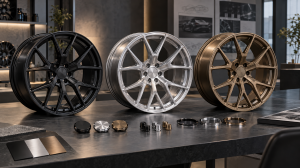
For established distributors, private-label forged wheels can create stronger long-term value than reselling identical catalog products.
A private-label program may include:
Exclusive spoke design
Custom center cap
Brand logo
Branded packaging
Special finish
Dealer-exclusive fitment
Product naming system
Marketing assets
Installation documentation
However, custom development also creates additional responsibilities.
Before starting a private-label project, define:
Ownership of design files
Tooling ownership
Exclusivity territory
Minimum annual volume
Product revision process
Quality approval procedure
Replacement and warranty terms
Brand usage rights
Packaging requirements
Dealers should also avoid developing too many unique SKUs without demand validation. A limited, recognizable collection is usually easier to market than a large assortment with no clear identity.
10. How to Position Forged Wheels to Different Customer Segments
Not every customer buys for the same reason. Dealers should adapt the sales message according to the application.
Performance customers
These customers may care about:
Vehicle response
Weight optimization
Brake clearance
Track suitability
Structural engineering
Tire and suspension compatibility
The sales discussion should be technical and evidence-based.
Luxury vehicle customers
These customers may prioritize:
Design
Finish quality
Fitment precision
Brand image
Exclusivity
Installation quality
The visual presentation and customer experience become especially important.
SUV and truck customers
These customers may focus on:
Load requirements
Durability
Tire compatibility
Road conditions
Practical clearance
Appearance
A lightweight racing message may not be appropriate for every SUV or truck application.
Retail customers seeking personalization
These customers often need guidance. They may know the look they want but not the technical data required to achieve it.
Dealers can add value by providing:
Design consultation
Virtual or physical samples
Fitment confirmation
Tire recommendations
Installation
Post-installation inspection
11. After-Sales Service Is Part of the Product
Forged wheels are a high-involvement purchase. A dealer’s after-sales process can determine whether the customer recommends the business or complains about it.
A good after-sales system should define:
Installation inspection
Torque procedures
Re-torque recommendations
Tire pressure guidance
Damage inspection
Warranty claim documentation
Replacement process
Finish-care instructions
Customer responsibility for impact damage
The dealer should also distinguish between manufacturing defects, installation errors, road impact, improper maintenance, and unauthorized modifications.
This distinction protects both the customer and the supplier relationship.
12. Common Dealer Mistakes
Mistake 1: Selling based only on appearance
A beautiful wheel can still be the wrong product for a particular vehicle. Visual approval should come after technical fitment review, not before it.
Mistake 2: Keeping too much inventory
Too many combinations of size, width, offset, PCD, finish, and design can create slow-moving stock.
Mistake 3: Using vague quality claims
Statements such as “strongest,” “best,” or “race proven” should not be used unless the dealer has evidence to support them.
Mistake 4: Ignoring tire availability
A wheel specification is only commercially useful if suitable tires are available at a reasonable cost in the target market.
Mistake 5: Failing to document customer approval
Custom products should not enter production until the customer has approved the final configuration in writing.
Mistake 6: Treating warranty as an afterthought
Warranty terms should be discussed before the first order, not after the first problem.
Mistake 7: Competing only on price
Premium forged wheels should be sold through engineering, fitment support, customization, service, and reliability—not only through a lower unit price.
13. A Practical Dealer Launch Plan
A dealer entering the forged wheel market can follow a staged approach.
Stage 1: Market validation
Review:
Existing customer inquiries
Vehicle segments
Competitor pricing
Popular diameters
Tire availability
Local installation capability
Demand for custom finishes
Stage 2: Product selection
Choose a focused group of designs and applications. Define which products will be stocked and which will be made to order.
Stage 3: Supplier verification
Request:
Product specifications
Fitment data
Test documentation
Samples
Finish samples
Packaging details
Warranty terms
Production lead times
Stage 4: Sales enablement
Prepare:
Product pages
Fitment charts
Finish guide
Installation checklist
Customer quotation template
Warranty policy
Professional product images
Dealer training materials
Stage 5: Controlled launch
Start with a limited number of products. Track:
Inquiry-to-order conversion
Average order value
Gross margin
Installation time
Return rate
Fitment issues
Customer feedback
Repeat purchases
Use the results to decide which designs and fitments deserve deeper inventory investment.
14. How to Choose a Long-Term Forged Wheel Partner
The right supplier should be evaluated on more than unit price.
A strong partnership normally combines:
Stable manufacturing capability
Consistent quality control
Clear engineering communication
Reliable fitment data
Repeatable surface finishing
Flexible customization
Transparent lead times
Practical MOQ requirements
Responsive warranty support
Professional export packaging
For dealers, supplier reliability has a direct effect on reputation. A delayed shipment, inconsistent finish, or incorrect fitment can damage the dealer’s relationship with the vehicle owner.
The best supplier is not always the one offering the lowest quotation. It is the one that helps the dealer reduce total business risk while building a product line that customers can trust.
Final Thoughts
Forged wheels can be a profitable and differentiated category for automotive dealers, but success requires a structured approach.
The most important questions are not only:
What does the wheel look like?
What is the unit price?
How quickly can it be shipped?
Dealers should also ask:
Does the fitment data support accurate installation?
Is the product suitable for the intended vehicle and use?
Can the supplier maintain quality across repeat orders?
Can the product support a healthy margin after landed costs?
Can the dealer explain the product value clearly?
Is there a practical warranty and replacement process?
Can the product line grow without creating excessive inventory risk?
When product engineering, fitment control, supplier cooperation, and customer service work together, forged wheels become more than an aftermarket accessory. They become a professional product category with strong opportunities for dealer branding, customer loyalty, and long-term growth.
Looking for a reliable forged wheel manufacturing partner?
Contact our team to discuss custom forged wheels, OEM/ODM development, vehicle fitment, finish options, sampling, and dealer supply programs.
Suggested FAQ Section
Are forged wheels a good product category for automotive dealers?
Yes, but they require more technical sales support than standard wheels. Dealers should have a clear fitment process, reliable supplier documentation, and a controlled product range.
What information is needed to quote forged wheels?
The dealer normally needs the vehicle model, year, wheel diameter, width, PCD, offset, center bore, tire size, brake information, intended use, and required quantity.
Should dealers stock forged wheels or sell them made to order?
A combination of both is usually practical. Common fitments can be stocked, while rare applications, special offsets, and custom finishes can be produced to order.
How can dealers reduce forged wheel returns?
Use a documented fitment checklist, confirm brake clearance, verify PCD and center bore, review tire compatibility, and obtain written approval before production.
Can forged wheels be produced under a dealer’s own brand?
Many manufacturers support private-label programs, including custom center caps, finishes, packaging, and exclusive designs. Terms such as tooling ownership and territory exclusivity should be defined in advance.
What should dealers check before choosing a forged wheel supplier?
They should review manufacturing capability, test documentation, fitment data, sample quality, finish consistency, MOQ, lead time, packaging, warranty terms, and communication quality.
Post time: Nov-27-2026